Backache and Cramps Vector Illustrations for Health Content
Let's be honest—finding the right visual for a health-related topic can be a headache. You need something that communicates pain or discomfort clearly without being overly clinical or, worse, comically exaggerated. That’s exactly the challenge this collection solves. The Backache and Cramps Vector Illustrations set offers a thoughtful, relatable solution for anyone creating content around common physical ailments.
More Than Just Clip Art: Understanding the Visual Style
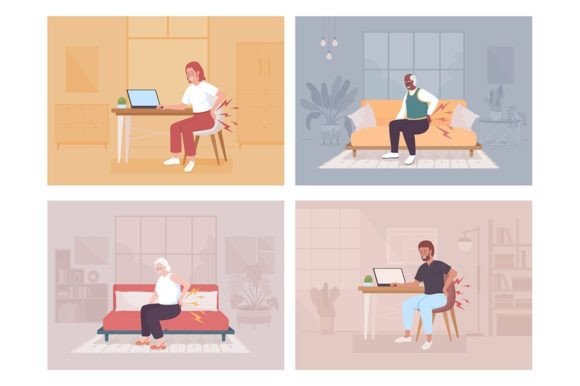
This isn't your average, sterile medical diagram. The collection features four distinct 2D simple cartoon characters experiencing back pain and cramps. Each character is rendered in a warm, flat color vector illustration style—think clean lines, soft color palettes, and a friendly, approachable aesthetic. The "cozy interior" background elements add context, making the scenes instantly understandable: a person wincing at their desk, someone holding their lower back while sitting on a couch. This style strikes a crucial balance. It’s professional enough for a medical blog or clinic website, yet friendly and relatable for a wellness app, a parenting forum, or a fitness brand’s social media.
The personality here is empathetic and modern. These aren't stiff, impersonal figures; they convey a shared human experience. For a designer, this means the illustrations can bridge the gap between technical accuracy and emotional resonance. They help you tell a story about lower back pain while sitting or the everyday reality of osteoarthritis symptoms without needing a single word of explanation. The fully editable nature of the files (available in EPS, SVG, PNG, JPEG, and AI) means you can adjust colors, scale elements, or even tweak poses to better fit your specific narrative.
Practical Applications: Where These Illustrations Shine
The versatility of this set is its real strength. As a design asset, it plugs into a wide range of projects. Consider how you might use it:
- Blog and Editorial Content: Accompany an article on ergonomic office setup or stretches for sciatica. The illustrations make technical advice more digestible and engaging.
- Social Media Graphics: Create eye-catching posts for a chiropractor’s Instagram, a yoga studio’s Facebook page, or a physical therapy clinic’s Twitter. The flat color style pops on mobile screens and ensures quick comprehension.
- Website and App Design: Use them as section headers, feature graphics, or onboarding illustrations for a health tracking app. They add a human touch that stock photography often lacks.
- Presentation and Pitch Decks: For entrepreneurs in the health tech or wellness space, these visuals can help illustrate a problem statement or user pain point in a pitch deck or webinar slide, making your message more memorable.
- Print Materials: From pamphlets in a doctor’s office waiting room to informational posters in a gym, the high-resolution formats ensure crisp output for any physical medium.
For content creators and marketers, this is a shortcut to professional, on-brand visuals. Instead of commissioning custom artwork or spending hours searching generic stock sites, you have a cohesive set that speaks directly to your audience’s experiences. It’s a practical way to enhance your brand identity with imagery that feels consistent and thoughtful.
Making It Work for Your Project: A Practical Guide
So, how do you integrate this collection effectively? First, think about visual hierarchy. These illustrations work best as supporting visuals, not the main headline. Pair them with clear, readable text—perhaps a clean sans serif font for body copy and a more distinctive display font for headings. The goal is a balanced layout where the illustration draws the eye and the text delivers the message.
Evaluate the fit for your specific context. If your project is a serious medical research paper, the cartoon style might feel too casual. But for a blog, social media, or consumer-facing app, it’s often perfect. Test different font pairings to see what complements the illustration’s friendly vibe. A modern, geometric sans serif can maintain clarity, while a slightly rounded typeface might echo the softness of the characters.
Since the files are fully editable, take advantage of that. You can isolate a single character, change the background color to match your brand palette, or even combine elements from different illustrations in the set. This level of customization helps maintain a unique and professional look across your materials, reinforcing brand consistency.
Finally, always review the licensing. The product description points to a shop for more assets, so it’s wise to confirm the terms for your intended use—whether it’s a personal blog, a commercial website, or a client project. Investing in quality design assets like this is about saving time and elevating your work, so ensuring you have the right permissions is a key part of the process.
In the end, effective visual communication in health and wellness content is about empathy and clarity. This collection of Backache and Cramps Vector Illustrations provides a ready-made tool to achieve both, helping you connect with your audience through imagery that feels genuinely human.