Flower Illustrations: A Practical Guide for Designers and Makers
Understanding the Visual Personality
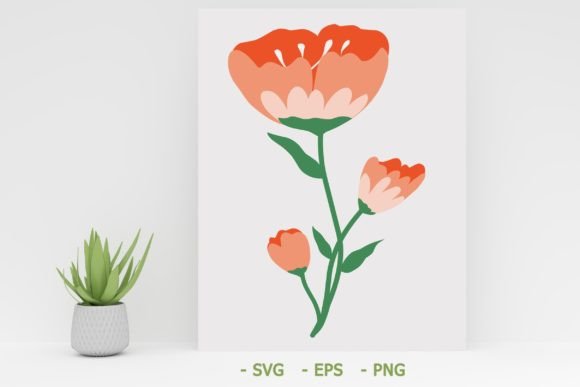
There's a specific kind of floral asset that goes beyond simple clip art. High-quality Flower Illustrations operate differently. They aren't just decorative; they are structural design elements. When you open the file, you notice the linework immediately. It's clean, intentional, and built with vector precision. This isn't a rough sketch. It is a premium font equivalent in the illustration world—polished, scalable, and ready for professional application.
The style balances organic shapes with a modern aesthetic. The petals have flow, but they don't look messy. The stems have weight, but they don't look heavy. This kind of illustration carries a personality that is versatile. It can feel elegant and sophisticated for a wedding invitation, or it can feel bold and contemporary for a streetwear brand. The visual appeal lies in its adaptability. It respects the source material—a real flower—while translating it into a graphic language that works on digital screens and physical products alike.
Practical Applications for Your Brand
If you are a small business owner or a creative entrepreneur, you know that visual consistency is hard to maintain. Flower Illustrations solve a specific problem here. Because the asset comes in scalable formats like SVG and EPS, you can use the same graphic across your entire ecosystem without losing quality.
Imagine you are launching a new skincare line. You need the illustration to work on your website header, your Instagram stories, and the physical label on a glass bottle. A raster image (like a standard JPEG) would pixelate or blur when resized. With the vector formats included in this package, the lines stay crisp. This is critical for packaging design and print projects where resolution determines professionalism.
This asset is also a game-changer for merchandising. If you run a print-on-demand store, you know the hassle of file preparation. This design asset is pre-optimized for t-shirts, mugs, posters, hoodies, tumblers, and wall art. The PNG format allows for immediate drop-in use on mockups, while the SVG gives you the freedom to edit. You can change the color palette to match a seasonal campaign or tweak the shape to fit a specific layout constraint. It provides the flexibility of a creative font but in a visual format.
Editing and Customization
The real value lies in the editability. A static image is limiting. A dynamic asset is empowering. The prompt mentions that this plant design can be edited to adjust shape and color. In practice, this means you aren't stuck with a generic green leaf. You can recolor the petals to match your specific brand identity hex codes.
For designers working in Adobe Illustrator or Affinity Designer, this is standard workflow. For non-designers using tools like Canva, the SVG import allows for color changes without needing advanced skills. This bridges the gap between professional graphic design and DIY content creation. It allows a blogger or marketer to create social media graphics that look custom-made, without the custom price tag.
Integrating with Typography and Layout
An illustration rarely stands alone. It usually interacts with type. Whether you are pairing this with a serif font for a luxury feel or a sans serif font for a clean, modern look, the illustration needs to hold its own without overwhelming the text.
These Flower Illustrations are designed with "breathing room" in mind. The shapes are distinct enough to be recognizable at small sizes—like a favicon or a small icon—but detailed enough to be a focal point in a large poster layout. This versatility supports good visual hierarchy. You can use a simplified version of the illustration as a background texture, or a detailed version as a hero image.
Strategic Considerations
When incorporating these assets, think about the "voice" of your project.
- For Editorial Design: Use the illustration to break up text-heavy pages. It adds a natural pause for the eye, improving readability and flow.
- For Logo Design: While the illustration itself might not be a logo, it can serve as a supporting mark or an emblem. Think of a coffee shop logo where the text is a script font and the flower is a stamp above it.
- For Web Design: Use the SVG format to keep load times fast. Vector files are generally lighter than high-res photos, which helps with site performance and SEO.
Ultimately, Flower Illustrations are more than just decoration. They are functional design assets that provide visual consistency across digital and print mediums. For the content creator or entrepreneur, they offer a way to elevate a project from amateur to professional with minimal friction. The ability to edit, recolor, and scale ensures that this single asset can serve dozens of different projects, maintaining a cohesive brand identity